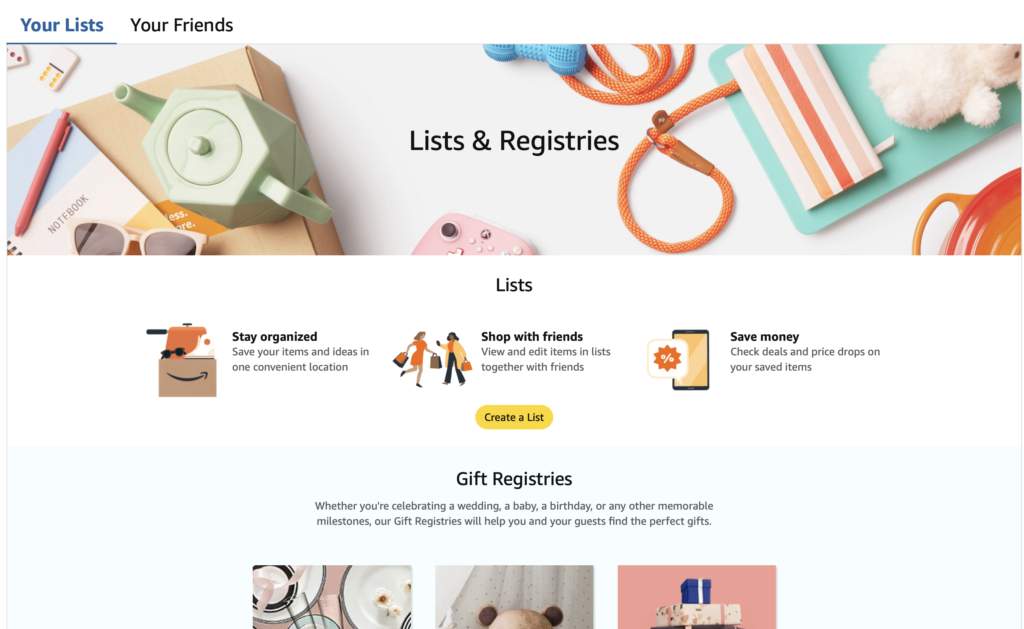
Most executives don’t give a second thought about their Amazon wish list, in fact I don’t think many people do. It’s just a place to store your favorite items for purchase later, there’s nothing strategic or sensitive to it. Or is there?
These days, where data is constantly being collected, interpreted, and cross-referenced, and now with a recent change by Amazon, even something as simple and innocuous as your Amazon wish list can become a source of exposure. What you save, when you save it, and how your list is shared can now reveal quite a lot, and sometimes to the wrong people.
Amazon wish list privacy risks are not about shopping, they’re about signals. For executives and high-net-worth individuals, those signals can be used to map your purchasing behavior, anticipate your decisions, and with this information craft highly personalized attacks that could feel legitimate.
Jump To:
Toggle
TL;DR / Key Takeaways
Amazon wish list privacy risks can expose behavior, intent, and even your address, especially after recent changes Amazon has made.
- Your wish list can reflect what you’re planning, considering, or preparing for next.
- Shared lists can create uncontrolled visibility beyond the people you trust.
- New changes on Amazon may expose your delivery address to third parties.
- Attackers use these signals to build highly targeted profiles and scams.
- Reducing exposure means controlling both visibility and behavior.
I doubt if Amazon wish list privacy risks come up in executive security meetings very often. Yet, it’s something that shouldn’t be ignored as they fit perfectly into how modern threats actually work. It’s subtle, quiet, data-driven, and can be highly targeted.
Moreover, the changes to how wish lists are fulfilled means that, under certain conditions, your delivery information such as your delivery address may now be shared with third-party sellers. That’s a subtle but important shift.
And according to Amazon, the changes were done mainly to improve product selection and to simplify the transaction when purchasing gifts. But for executives and high-net-worth individuals who can’t afford even small exposures, when combined with publicly available information, begin to emerge as patterns, habits, and even physical locations.
Many people believe their wish lists are private, but these recent changes by Amazon demonstrate this may not be the case.
In this article, you will learn:
- What your Amazon wish list actually reveals.
- How recent changes increase your exposure.
- Why this creates real risks especially at the executive level.
- And how to reduce your visibility without disrupting your workflow.
So let’s get to it!
What Your Amazon Wish List Really Reveals
Before, your wish list was restricted to only include items that were “Fulfilled by Amazon” which kept your home address hidden from gift buyers. The new policy changes eliminate that restriction.
Therefore, every item you add to your Amazon wish list reveals something about you, it reflects a moment of consideration, and over time those moments begin to form a pattern that can be interpreted to build behavioral patterns.
Thus, someone reviewing your list could start to understand your interests, priorities, and even your timeline. Based on the items in your wish list someone may be able to deduce if you’re preparing to travel, upgrading your home, or investing in new technology. It can even reveal gender with considerable accuracy. These are more than just assumptions, these are signals used to profile your behaviour.
Realistic Scenario
Consider for a moment; an executive or high networth individual logs into their Amazon account and start to add items related to:
- Premium luggage
- Travel accessories
- Portable safes
Individually, these items are ordinary, but when taken together, they suggest that the person is preparing to travel.
Now combine that with publicly available information, such as a scheduled conference, and a clearer picture begins to emerge.
This is how Amazon wish list privacy risks become actionable.

Why It’s a Serious Risk
1. Privacy Risks
For executives and HNWIs this policy change can pose a serious operational security vulnerability. That’s because these individuals are usually targeted for corporate espionage, focused harassment, and blackmail.
The recent changes made by Amazon have created significant privacy risks.The change happened in March 2026 when Amazon removed the ability to block third party sellers from fulfilling items on your list. This now means your full delivery address may be shared with those sellers when items are purchased.
Furthermore, delivery tracking and status updates can now allow buyers to see your address at checkout. A malicious or bad actor can easily purchase the least expensive item on your list just to obtain your home address during the shipping process.
According to IBM Security, attackers rely heavily on aggregating small data points to build profiles. With these changes by Amazon, your wish list, and now potentially your address becomes available.
2. Financial Risks
If someone knows what you’re interested in, or what you’re about to purchase, it can open the door to scams and fraud. Scammers can use the information gathered from your wish lists to craft messages that feel credible. A tailored message referencing a specific item carries far more weight than a generic phishing attempt.
For example, they can send a fake message saying that you’re going to receive a gift with links to “confirm your address” before the gift is sent. You’ll then be directed to a spoofed site that can look like a legitimate page from Amazon. Once there, you’ll be none the wiser and login with your Amazon credentials, next you provide your payment details, essentially giving the attackers exactly what they want.
The Federal Trade Commission has consistently found that personalized scams are significantly more successful., and your wish list provides exactly the kind of detail attackers want.
Executive takeaway:
The more specific the information, the more convincing the deception.
3. Physical Safety Risk
This is where the risk becomes more serious as it introduces doxxing; the exposure of your physical address to would be attackers and other third parties.
So if a wish list is used to fulfill an order, and that order is handled by a third-party seller, your delivery address may be shared as part of the process.
On its own, that may seem rather harmless, but when combined with other publicly available information such as your position in a company, your public presence, or known schedules, then it creates a pathway to physical identification.
For executives and high-net-worth individuals, that’s not something trivial, and proper measures should be taken to avoid this from happening.
Regarding your physical security, here are some of the main threats:
1. Doxxing & Physical Recon: It bypasses your privacy trusts to give away your verified home address to strangers.
2. Trojan Horse Attacks: Sellers can ship compromised items that dodge security checks because you asked for them.
3. Nth-Party Data Leaks: Your address sits in the insecure databases of every small vendor involved in the fulfillment.
4. Kidnapping & Ransom & Surveillance: Tracking maps and delivery photos give kidnappers your routine and exact gate layout.
Executive takeaway:
Digital exposure can translate into real-world risk faster than most people expect.
4. Reputational Risk
Executives and HNWIs operate in environments where perception matters. Items saved to a wish list such as books, personal products, and affiliations can create a searchable record that can look like a conflict of interest or an ethics violation.
It basically hands opposition researchers (those tasked with the responsibility to dig up dirt or any kind of leverage to be used against a person of influence) a script to paint you as out of touch or easily influenced, which is the last thing you want during a corporate crisis.
Basically, they take “innocent” information and weaponize it. In a high-stakes environment, a wish list isn’t just a list of gifts, it can be a publicly accessible database of an executive’s personal desires and potential ethical blind spots. And in today’s world driven by hyper connectivity, you can bet people will form their own opinions about you very quickly.
Executive takeaway:
You don’t control interpretation, you only control what you expose.
For further reading, check out the related articles: Is Your Name on the Dark Web’s Executive Hit List?
and When Too Much of Your Life Runs on Systems You Don’t Control.

Executive-Level Solutions
Reducing Amazon wish list privacy risks requires a shift in mindset, from convenience to control.
Firstly let’s start with visibility. If your list doesn’t need to be shared, keep it private. That alone eliminates a large portion of the risk.
Next, consider where your data lives. Using your home address for all deliveries may be convenient, but it also increases exposure. A P.O. box, business address, or controlled delivery location adds an important layer of separation.
Finally, think in terms of signals. Every item you add contributes to a pattern.
Top 10 Defenses for Executives
- Keep wish lists private by default
- Avoid using your full name or identifiable details
- Do not share links casually, even with trusted contacts
- Use a separate delivery address when possible
- Be mindful of high-signal items (travel, major purchases)
- Regularly audit and clean your lists
- Enable two-factor authentication
- Use a dedicated email for shopping accounts
- Monitor account activity
- Ask yourself: What does this list reveal over time?
A Better Approach
One executive moved all personal purchases to a separate account and used a business address for deliveries. They also avoided saving sensitive items altogether.
The result was simple: fewer signals, less exposure, and more control.
The Bigger Picture
Amazon wish list privacy risks are not isolated, they’re part of a broader pattern of digital exposure.
Today, your profile is built from multiple sources:
- Social media
- Search behavior
- Data brokers
- Device tracking
- AI-driven analysis
According to Statista, personal data generation continues to rise. Meanwhile, Cybersecurity Ventures projects cybercrime costs to reach trillions globally.
Individually, these data points seem insignificant. Together, they create clarity.
Want the full strategy? Download my guide: The Executive’s Privacy Blueprint
Conclusion
For executives and high-net-worth individuals, exposure rarely comes from a single event. It builds through small signals, patterns that accumulate over time.
Recent changes to Amazon’s wish list policy have made those signals more impactful. What was once a passive tool now has more direct implications for privacy and security.
Quick Recap:
Wish lists reveal intent, timing, and behavior
Shared visibility increases exposure risk
Recent changes may expose your delivery address
Simple adjustments can significantly reduce your risk
FAQs
Can my address really be shared through a wish list?
Yes, if an item is fulfilled by a third-party seller, your delivery address may be shared as part of the shipping process.
Is this a new risk?
The risk has increased due to recent changes allowing broader third-party fulfillment of wish list items.
Should I stop using wish lists?
Not necessarily. The goal is to use them more deliberately and with awareness.
Who is most at risk?
Executives, public figures, and high-net-worth individuals are more likely to be targeted due to the value of their data.
What’s the safest setup?
Private lists, minimal identifying information, and controlled delivery addresses provide the strongest baseline.